Professional landscape photograph of San Miguel, Lima, Peru with the Pacific coast and modern architecture.
32th Anniversary Edition

Workshop on Logic, Language, Information and Computation

A premier scientific forum for the exchange of research ideas between logicians, linguists, and computer scientists on the foundations of computation.

Format & Mission

Interdisciplinary Excellence

WoLLIC 2026 will be an onsite event exploring the intersection of structural logic and functional linguistics in modern computational theory.

Scientific Scope

Contributions are invited on all pertinent subjects, with particular interest in cross-disciplinary topics. Areas include foundations of computing, programming and AI; novel computation models; broad notions of proof and belief; proof mining, type theory, effective learnability and explainable AI; formal methods; logical approach to natural language; and foundations of mathematics and philosophy of language.

Program Highlights

Workshop Schedule

3 AUG

8:15 - 8:30 am

Welcome

8:30 - 10:00 am

Session 1

10:00 - 10:30 am

Break

+ 1 more sessions

Welcome remarks, Session 1 (featuring paper presentations and invited speaker Marianna Girlando), and Session 2.

4 AUG

9:00 - 10:30 am

Session 3

Session 3 featuring presentations on strategies, team logics, and eventual common knowledge.

5 AUG

8:30 - 10:00 am

Session 4

10:00 - 10:30 am

Break

10:30 - 11:30 am

Session 5

+ 1 more sessions

Session 4, Session 5 (featuring invited speaker Delia Kesner), and the Closing remarks.

Invited Speakers

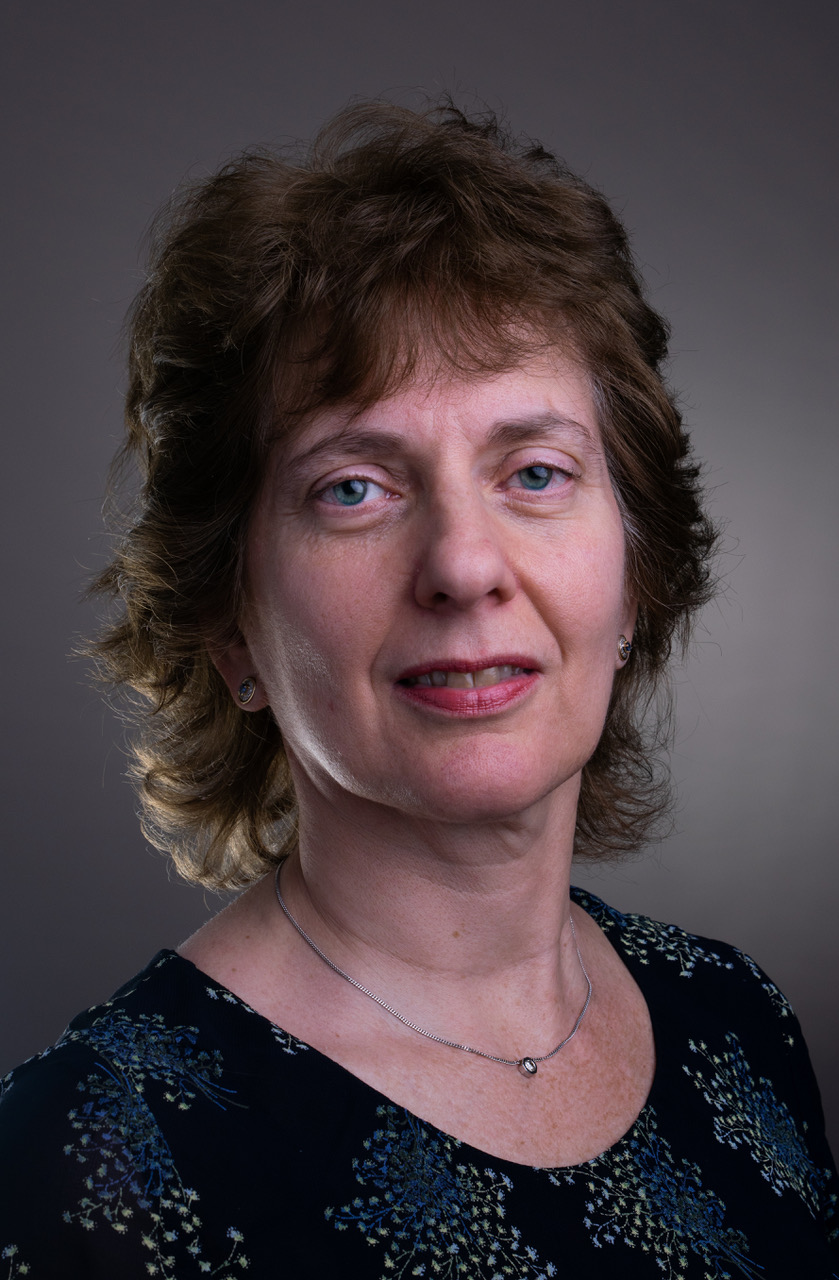
Marianna Girlando
Invited Speaker

Marianna Girlando

ILLC, The Netherlands

Assistant Professor at the Institute for Logic, Language and Computation (ILLC) of the University of Amsterdam. Website: https://www.mariannagirlando.com/Girlando.html

Research Interests

proof theorymodal logicssequent calculuscyclic proofsdeep inferenceconditional and epistemic logicsdevelopment of automated provers
Cyclic proofs for Transitive Closure Logic via Hypersequents

"Propositional Dynamic Logic (PDL) is a modal logic for reasoning about the iterative execution of programs. Via the standard translation, PDL can be embedded into Transitive Closure Logic (TCL), an extension of first-order logic with a recursive operator expressing the transitive closure of binary relations. Cyclic proof systems based on Gentzen-style sequents have been developed for both PDL and TCL in the literature, but cyclic proofs for PDL do not directly translate into cyclic proofs for TCL. Therefore, the standard translation does not lift to the level of Gentzen-style cyclic proofs. Motivated by this observation, we introduce a hypersequent-style cyclic proof system for TCL, which enriches Gentzen-style sequents with additional structural connectives. We prove that this system is sound and that it simulates cyclic proofs for PDL, thereby establishing cut-free completeness for a fragment of TCL. This talk is based on joint work with Anupam Das: https://link.springer.com/article/10.1007/s10817-023-09675-1"

Delia Kesner
Invited Speaker

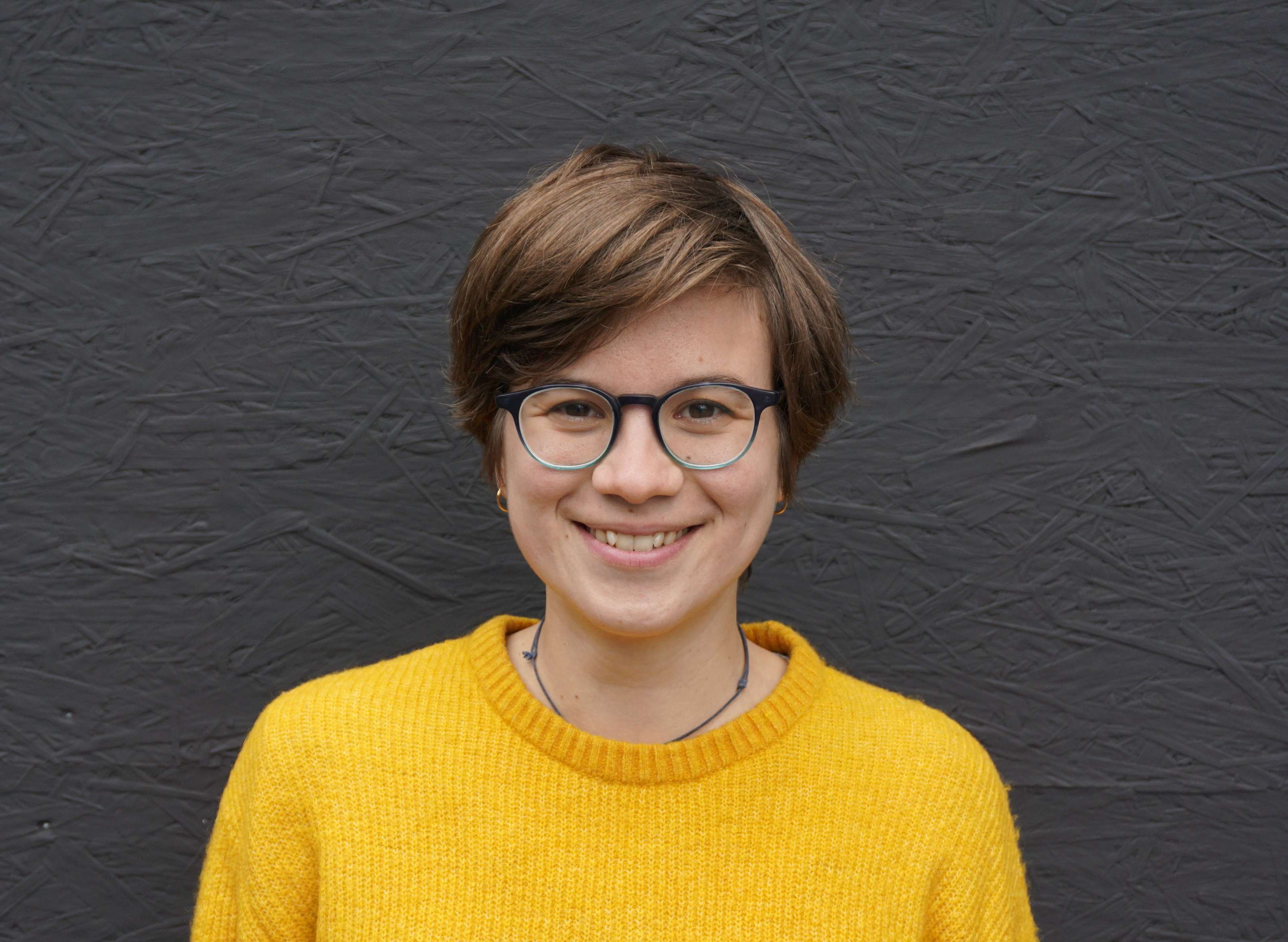
Delia Kesner

Université Paris Cité, France

Full Professor in Computer Science UFR d'Informatique - Université Paris Cité. Member of IRIF (CNRS UMR 8243)- Université Paris Cité. Deputy Director of Ecole Doctorale 386 de Sciences Mathématiques de Paris Centre. In charge of the ERC Unit @ CNRS Informatics Director (France) of IRP SINFIN Senior Member of Institut Universitaire de France (IUF) Corresponding Member of the Academy of Sciences of Torino

Research Interests

logic programming
Quantitative Types

Quantitative techniques are emerging in different areas of computer science in response to the growing need to reason about resource-aware computation. This talk introduces quantitative types, a mathematical framework that provides a unified understanding of resource usage in higher-order programming languages. We first present the key ideas underlying quantitative types, from both computational and semantic perspectives. We then show how these systems can be applied to quantitatively characterize normalization, solve inhabitation problems, and study observational equivalence.

Paper Submissions & Proceedings

Contributions should be written in English, prepared in the Springer LNCS format, and framed for readers across the broader WoLLIC community. Accepted papers are expected to appear in the workshop proceedings after the event, with further publication opportunities planned for selected work.

Special Session

Screening of Movies about Mathematicians

In a special session at WoLLIC 2026, we are proud to screen "Journeys of Black Mathematicians: Creating Pathways" (2025, 59 min.).

This documentary explores the groundbreaking achievements of African American mathematicians and is the second film produced by Zala Films as part of the Journeys of Black Mathematicians project, started in collaboration with the Simons Laufer Mathematical Sciences Institute (SLMath) in 2020.

Documentary screening placeholder
Film Screening

Venue

Virtual — Online Worldwide

100% OnlineGlobal Participation

WoLLIC 2026 will take place entirely online, bringing together logicians, linguists, and computer scientists from around the world — no flights, no hotels, just ideas. Sessions, talks, and discussions will be hosted on our virtual conference platform.